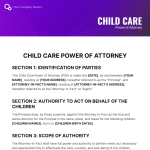
When to Consider a Power of Attorney for Your Child: Key Situations
As a parent, you want to make the best decisions for your child’s future. While it might seem overwhelming at times, understanding the legal tools available to you can help. One such tool is a Power of Attorney (POA). This document grants authority to someone else to make decisions on behalf of your child in specific situations. Knowing when to consider a Power of Attorney can be vital for your family’s peace of mind.
Understanding Power of Attorney Basics
A Power of Attorney is a legal document that allows one person to act on behalf of another in legal or financial matters. When it comes to your child, a Power of Attorney can be particularly useful in various circumstances, such as travel, medical decisions, or financial transactions. The person you designate as your child’s agent can be a trusted family member or friend—essentially someone you trust to act in your child’s best interest.
When Traveling Out of State
Planning a family trip? If you’re traveling out of state or internationally with your child, it’s wise to have a Power of Attorney in place. This is especially important if you’re going without your child’s other parent or guardian. Should a medical emergency arise while you’re away, having a POA allows your designated agent to make critical healthcare decisions on your child’s behalf.
For instance, if your child were to fall ill or get injured, your agent could authorize necessary treatments or procedures without having to delay care. This can be important in situations where time is of the essence. If you’re uncertain about how to create a Power of Attorney, resources like https://formstemplates.net/blank-new-jersey-power-of-attorney-for-a-child/ can guide you through the process.
During Medical Emergencies
Life is unpredictable. If your child has a medical condition that could result in emergencies, having a Power of Attorney can ensure that someone can make healthcare decisions quickly. This can relieve some stress during an already challenging time. Your agent will have the authority to discuss your child’s health with doctors and make informed decisions about treatment options.
Without a POA, you may face legal hurdles in obtaining information or making decisions, especially if you’re not present. This kind of preparedness can make a significant difference when every moment counts.
For Financial Transactions
As children grow, they may start to engage in financial activities, like opening a bank account or applying for a credit card. Granting a Power of Attorney for financial matters allows someone to manage your child’s financial affairs, ensuring that important transactions are handled correctly. This can be particularly important if you’re unable to be there in person.
For example, if your child is attending college out of state and needs to manage finances, a POA can enable a trusted agent to access funds or make necessary payments on their behalf. It simplifies their financial independence while ensuring they’re supported.
In Case of Parental Absence
Life circumstances can change rapidly. If you anticipate a situation where you may be unavailable to care for your child—whether due to work commitments, health issues, or other personal matters—establishing a Power of Attorney can provide peace of mind. It ensures that your child has someone to rely on in your absence.
Moreover, having a POA in place can help clarify who can make decisions for your child, avoiding potential disputes among family members or friends. It’s a proactive step that can ease concerns during uncertain times.
Legal Considerations
Creating a Power of Attorney is not just about filling out a form; it’s important to understand the legal implications involved. Each state has its own laws regarding POAs, so familiarizing yourself with these regulations can save you time and trouble. Generally, a POA must be signed in front of a notary or witnesses to be considered valid.
Consulting with an attorney can also provide clarity on which type of POA suits your needs—general versus limited, durable versus non-durable. Each has different scopes and durations of authority.
How to Choose the Right Agent
The person you designate as your agent plays a significant role in the effectiveness of the Power of Attorney. Here are some key qualities to consider:
- Trustworthiness: The agent must be someone you trust implicitly.
- Responsibility: They should be reliable and able to act swiftly when necessary.
- Knowledge: Ideally, they should have some understanding of your child’s needs and preferences.
- Availability: Choose someone who can be easily reached during emergencies.
Your choice of agent can greatly influence how well your Power of Attorney functions in practice. Take the time to discuss your expectations and the responsibilities involved before making a decision.
closing thoughts on Power of Attorney
Understanding when to consider a Power of Attorney for your child can significantly shape your family’s readiness for various situations. Whether it’s for travel, medical emergencies, or financial matters, a POA acts as a safeguard for making essential decisions on your child’s behalf. By preparing in advance, you can focus on what truly matters—providing the best for your child.